The power of ensembles

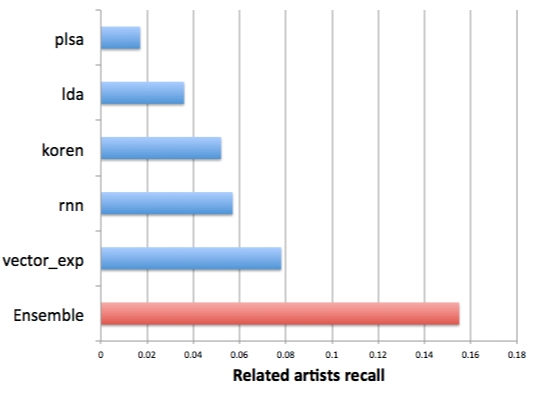
From my presentation at MLConf, one of the points I think is worth stressing again is how extremely well combining different algorithms works.

image

In this case, we’re training machine learning algorithms on different data sets (playlists, play counts, sessions) and different objectives (least squares, max likelihood). Then we combine all the models using gradient boosted decision trees training on a smaller but higher quality data set. Finally, we validate on a third data set, in this case looking at recall for a ground truth data set of related artists.

Read more…

Music recommendations using cover images (part 1)

Scrolling through the Discover page on Spotify the other day it occurred to me that the album is in fact a fairly strong visual proxy for what kind of content you can expect from it. I started wondering if the album cover can in fact be used for recommendations. For many obvious reasons this is a kind of ridiculous idea, but still interesting enough that I just had to explore it a bit. So, I embarked on a journey to see how far I could get in a few hours.

Read more…

Luigi success

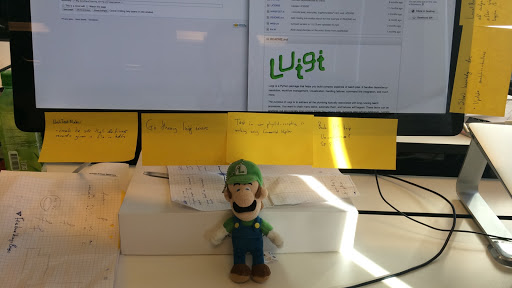
So Luigi, our open sourced workflow engine in Python, just recently passed 1,000 stars on Github, then shortly after passed mrjob as (I think) the most popular Python package to do Hadoop stuff. This is exciting!

image

Read more…

Benchmarking nearest neighbor libraries in Python

Radim Rehurek has put together an excellent summary of approximate nearest neighbor libraries in Python. This is exciting, because one of the libraries he’s covering, annoy, was built by me.

After introducing the problem, he goes through the list of contestants and sticks with five remaining ones. Finally, the benchmarks pits annoy against FLANN. Although FLANN seems to have roughly 4x better performance, somewhat surprisingly, Radim concludes annoy is the “winner”. Yay!

Read more…